Author: Ken Gray
Editors: Margaret Remilton and Diane Bull.
 |
Download PDF |
The islands scattered off Mission Beach have captured imaginations worldwide since Ted Banfield published his first book, Confessions of a Beachcomber, in 1908. It's easy to understand why. These tropical jewels offer something rare: genuine dense rainforest meeting pristine beaches, with freehold land on three islands creating opportunities for those seeking their own slice of paradise.
REMARKABLE ARCHIPELAGO
The islands have attracted remarkable characters over the decades: Ted Banfield himself on Dunk, English playboy Hugo Brassey also on Dunk, artist Noel Wood on Bedarra, artist sisters Val and Von Cohen on Timana, and reef conservationist John Busst on Bedarra. Each left their mark on these islands, and their stories are preserved in the Mission Beach Historical Society's collection.
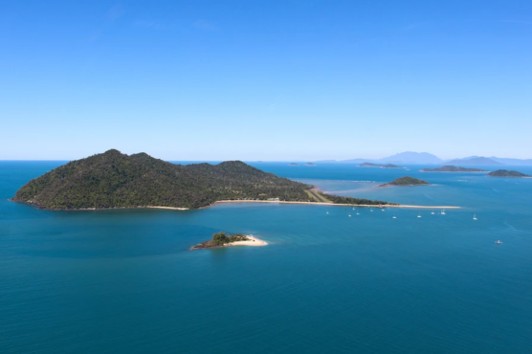 Family Group of Islands, Image from TTNQ.
Today, most of these islands are national parks. Bedarra, which remains freehold, hosts a small luxury resort that treads lightly on this idyllic refuge, something even Noel Wood, who lived and painted there for 50 years, would likely approve of.
Within a 50-kilometre radius of South Mission Beach lie 29 tropical islands. Combined with 14 mainland beaches in the Mission Beach district, visitors can explore 47 additional beaches across the islands, each with its own character, from sweeping crescents to hidden coves. It truly is paradise, and it's not lost.
Between 1937 and 1949, electoral rolls show more residents living on the islands than in the Cardwell Shire portion of Mission Beach. In 1943, for instance, ten residents were listed as living on the islands compared to just four on the mainland. Most Mission Beach residents lived in Johnstone Shire at the time, and the population was tiny. The islands were the centre of activity until 1954, when banana farmers began moving into the district and the balance shifted.
The nearest islands to Mission Beach form the Family Group: 13 islands with 30 beaches between them. Dunk is the largest and closest to the mainland, a mere four kilometres from South Mission Beach. The most distant, Hudson Island, sits 16 kilometres offshore. The Brook Islands, 29 kilometres from South Mission Beach, are often associated with Cardwell despite Mission Beach being slightly closer. Hinchinbrook and Goold Islands lie closer to Cardwell, while the South Barnard Islands (Stephens and Sisters) sit near Mission Beach, but closer to Kurrimine.
These islands were once part of the mainland before rising sea levels separated them 8,000 years ago, creating the archipelago we see today.
ISLAND NAMES
Captain Cook named Dunk Island in 1771 and gave the island group its collective name, the Family Islands. Most sources claim he named Dunk after George Montague, First Lord of the Navy, but Ted Banfield's thorough research revealed the true honouree: George's son, John Montague Dunk, who took the Dunk name after inheriting a large estate from Sir Thomas Dunk of Tongs, Kent.
The Djiru name for Dunk Island is Coonanglebah.
In 1886, Lieutenant George Richards arrived on the survey ship HMQS Paluma and systematically named the major Family Group islands. He assigned his own name to Bedarra (also known as Richards Island). Other islands received names from his officers: Wheeler (Toolghar) after Lt Francis Wheeler, Coombe (Coomboo, a misspelling of Lt James Combe), Bowden (Bud-joo) and Smith (Kurrumbah) after Lt Francis Bowden-Smith, Hudson (Coolah) after engineer William Hudson, and Thorpe (Timana) after surgeon Vidal Thorpe. Smaller islands generally retained their Aboriginal names, except Purtaboi, which was called Mound Island for a time, but is more commonly known as Purtaboi today.
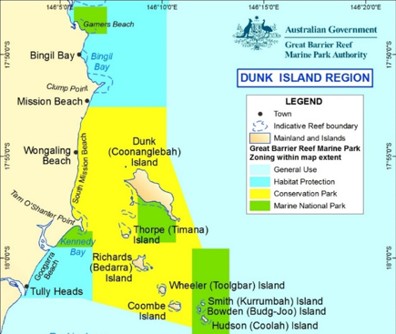 Image courtesy Great Barrier Reef Marine Park Authority. Family Island Group. © Commonwealth of Australia (GBRMPA) 2019.
When Captain Henry Allason purchased Bedarra from the Crown in 1913, yet another name appeared: Allison Island, again misspelled.
Noel Wood, who lived on Bedarra for decades, offered different Aboriginal names, calling Peerahmah Island Gumulga and suggesting Timana was actually Timanoo. This confusion may stem from the area's position on the border of Djiru and Bandjin Country, meaning islands could have multiple Indigenous names.
Ted Banfield called the island Noel Wood lived on Bedarra, believing it to be the Djiru name, but Noel insisted it was pronounced Biagurra.
INHABITED ISLANDS
Dunk Island covers approximately 1,230 hectares. The Banfields purchased 320 acres on it in 1897 and a further 40 acres in 1900; that’s 360 acres in total that remain privately owned. More than 70% of the island is National Park, yet the press regularly announces Dunk Island sold to... as if the entire island changes hands.
Bedarra Island spans 100 hectares (almost 250 acres) and is entirely freehold. The resort owns much of it, with seven private residential lots occupying land once owned by artist Noel Wood for 60 years.
Timana Island is the smallest of the three at just 16 hectares, with no permanent water supply. It's privately owned with one dilapidated residence.
A common myth persists that some of the island beaches are privately owned. In fact, the State of Queensland owns all beaches to the high water mark, with very few exceptions. Illegal signs on rocks at some island beaches warning visitors not to land should be ignored, particularly at Bedarra.
RAINFOREST AND WILDLIFE
These tropical islands possess unusually lush rainforest compared to tropical islands elsewhere in Australia. Dunk has the densest forests, especially in its sheltered valleys. Most islands in the Family Group, along with the South Barnards and the four Brook Islands, are now national parks and important bird sanctuaries.
Large colonies of Torres Strait Imperial Pigeons (also called nutmeg pigeons) nest here in summer. These beautiful birds migrate from the Torres Strait Islands and Papua New Guinea, arriving in late August and departing in late March. They stay here for seven months of the year. Each day they fly to the mainland to feed, returning to their chicks in the late afternoon, a spectacular sight that continues to draw birdwatchers. Several important tern species nest on the ground, and some islands are closed to visitors during breeding season to protect them.
In April 2024, the Queensland Government acquired 140 small 'islands' in the Great Barrier Reef Marine Park, adding them to protection zones. Wol-Garin Island (Forty Foot Rock, beside Dunk) and Pee-Rahm Ah (Battleship Rock near Bedarra) were included.
Camping is allowed with permits on Dunk, Wheeler, Coombe, South Brook, and Stephens Islands. Hudson and the Bowden Islands allow day-use only, with limits on visitor numbers. Smith Island and three Brook Islands are completely off-limits. The Commonwealth owns South Brook Island, which is managed by the Great Barrier Reef Marine Park Authority, while Queensland Parks and Wildlife manages the others.
DUNK ISLAND
The Banfields
The first owners of Dunk Island's freehold land were Ted and Bertha Banfield, who won a 30-year lease in 1897. Ted died in 1923, and Bertha remained another year before moving south with her Irish companion, Essie McDonough.
After the devastating 1918 cyclone, Ted faced severe financial difficulties. Spenser Hopkins, son of the Banfields' good friend Hollis Hopkins, stepped in to help. Hollis had camped on Dunk with Ted before he leased the island, and Spenser had recently returned from London to run his father's Townsville business empire. He offered to take a half share in the land in exchange for providing Ted with a fixed income for 15 years.
When Ted died, Spenser was one of the first to reach the island. His sister Lilian, also close to the Banfields, served as caretaker while Bertha attempted to find a lessee. Lilian spent a year alone on the island (with one or two Aboriginal workers tending the farm), where she met George Webb. When they married in 1925, Bertha needed a new caretaker. She hoped a university would take over the island and convert it to a national park, but negotiations failed. She returned to the island three times before her death in 1933 and was buried beside her husband. A second plaque was added to their memorial cairn.
Bertha and Spenser agreed he would inherit her half share of the land in exchange for paying Essie an income for life. George and Emily Morris, who had operated the resort at Orpheus Island, came to Dunk as caretakers in 1932. Spenser then arranged for Swiss restaurateurs Frederic and Enid Treuthardt to establish the resort, but Frederic soon persuaded Hugo Brassey, an Englishman who visited Dunk on his boat in 1935, to purchase most of the freehold land for £10,000. Hugo's wealthy father provided the cash as a wedding present. Spenser retained five acres.
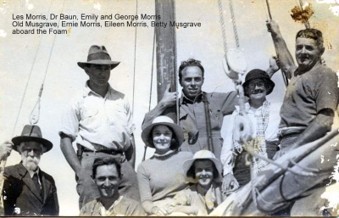 Dunk Island folk aboard the Foam. Image from the Anderssen Collection
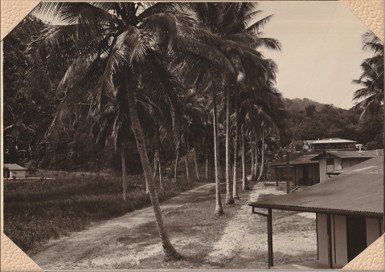 Brassey Resort, image from the Wagner Collection
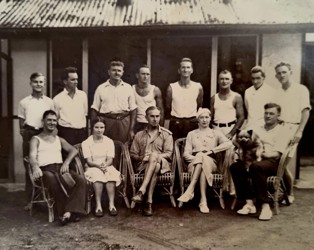 Spenser resort, Photo courtesy Pauline Leeman; her father, Walter Anderssen is top row left alongside Harry Guy, George Morris, Len Morris, Len Foster, Ray Wilson, ? Guy and Bill Rankine. Front row is from left unknown person, Barbara Skaggs, Arthur Pollok (manager), Miss Eunice Peberdy (Tully Band Assoc.) and Lewis Wiskar cook, holding Susan (Frieda Pollok’s Australian Terrier). Max Bell provided the names
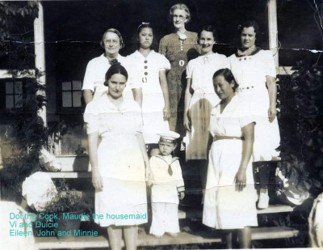 Staff of the first resort venture. Dot the cook, Maureen the housemaid, Vi and Dulcie, Eileen Morris, John and Minnie. Image from the Barry Anderssen Collection
The Treuthardts sued for wrongful dismissal when Hugo employed his uncle and aunt, Arthur and Frieda Pollok from Ireland, to run the new resort.
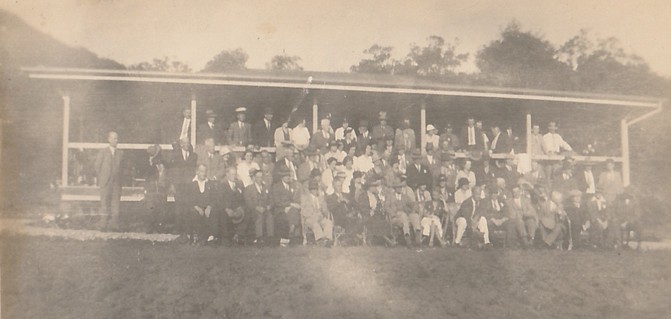 Resort on Dunk Island during a busy weekend with 140 guests. Image from Noel Wagner, nephew of Olga Wagner who was the wife of the resort’s chef, Lou Wiskar, who took the photo.
The Brassey Era
Hugo Brassey quickly set up a more substantial resort on the island building significant infrastructure with his father’s capital: numerous holiday cabins, a dance hall and bar, a large power plant, a small airfield, a jetty, two large boats, and even a seawater swimming pool. The resort was popular and received much colourful publicity with its young celebrity owners capturing the imagination of the press.
In December 1937, Hugo Brassey's beautiful young wife, Christa, tired of his philandering and divorced him while living in London. Hugo enlisted with the Royal Navy and went to war in Europe in 1939, hiring George Morris and his family to run the resort.
Later, Hugo asked Noel Wood of Bedarra Island to oversee his resort operations while he was at war. Meanwhile, George Morris's daughter Eileen had married the launch skipper, Laurie Anderssen, who held the resort licence. Arguments erupted when Laurie declared his ambitions to run the resort himself. Hugo was asked to intervene but remained uncommitted, and George's son Les, an accomplished boxer, physically confronted Laurie, creating much publicity. The dispute became moot in 1942 when the RAAF took over the island as a military reserve for a radar station. George and Emily Morris stayed on briefly, catering for RAAF crews, while Les enlisted in the Army.
Post-War Transitions
Hugo and his second wife Barbara returned to Dunk briefly after the war, leasing the resort to Gerald Court, who was soon declared bankrupt. Noel Wood agreed to manage the property while they sought a buyer. In early 1952, they sold it at a much reduced price to E.C. (Eddie) Doepel, an estate agent from Ballarat who was keen to rebuild the resort. Eddie sold it again in 1956 to Kathleen and Gordon Stynes, who rebuilt the jetty. In 1967, the resort was sold to a company managed by Eric MacIlree, founder of Avis.
Bruce Arthur moved to Dunk Island in 1974 after disputes with his partner, Deanna Conti, on Timana Island. While Deanna had created most of the textile artworks on Timana, Bruce continued his weaving on Dunk, establishing a small studio on five acres he leased from Spenser Hopkins. He named his home and studio Hunger Ridge and maintained an ‘artists commune’ there, entertaining young female resort guests until his death in 1998. Susan Kirk, an accomplished silversmith-artist who lived nearby from 1984, continued Bruce's commune until leaving in 2011 after Cyclone Yasi.
Modern Resort Era
TAA Airline, in partnership with P&O, purchased the resort in 1976. P&O later sold their share to TAA, which Qantas took over in 1992. P&O Australian Resorts bought it back in 1998, and Voyages acquired it in 2004. In 2009, Hideaway Resorts purchased both the Dunk and Bedarra resorts.
Cyclone Yasi destroyed Dunk Island Resort in 2011. It was sold in 2014 to Peter Bond of Linc Energy, then to Mayfair 101 in 2019, but repossessed in 2020 when payment wasn't completed. In July 2022, Annie Cannon-Brookes, wife of Atlassian's co-founder, purchased the resort for $23.6 million. After 13 years, the resort has yet to reopen. At its peak, it offered 250 accommodation units with capacity for up to 500 guests.
BEDARRA ISLAND
Captain Henry William Allason eagerly read Banfield's Confessions of a Beachcomber in England and was determined to find a similar haven. He visited Ted on Dunk, then decided to purchase Bedarra Island, obtaining the freehold for just £20. The bargain was even better than it appeared, Timana Island was included in the deal.
Henry and his wife enjoyed island life for little more than a year. He became known for his long inter-island swims, but in 1914 the British Army called him up and sent him to war in France. Rising to Lieutenant in the East Surrey Regiment, he was gassed and never recovered enough to return to Bedarra. He spent his remaining years near Nice, France, where he died in 1935.
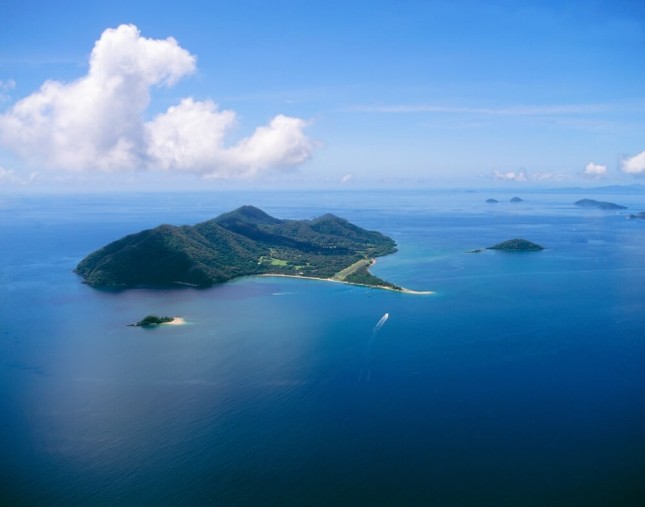 Some of the many islands in the Family Island group. Image copyright © Lincoln Fowler Photography, Brisbane.
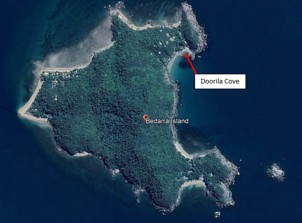 Bedarra Island, from Google Earth.
Early Ownership
In the late 1920s and 1930s, locals from nearby sugar towns camped on Bedarra during the ‘slack’ season.
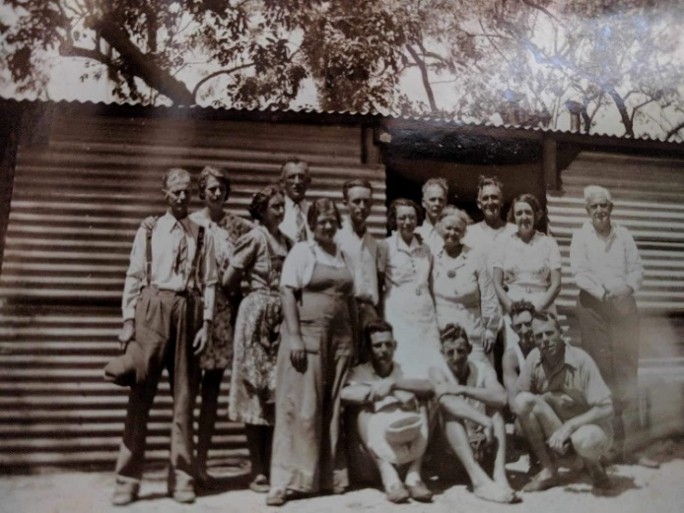 Campers Bedarra. Centre Jack Mitchell and his mother, Eliza. From Jan Mitchell.
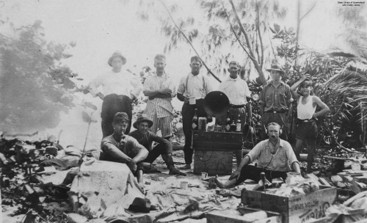 Campers Bedarra 1931, John Oxley Library, State Library of QLD
During the 1920s, Gilbert and Sullivan singer Ivan Menzies met Henry Allason in Nice and purchased both Bedarra and Timana for £500, still a bargain for an island with permanent water, divine beaches, and attractive rainforest glades. Dorilla Cove, where Noel Wood would later live, offers perhaps the ultimate island beach experience, yet it's just one of many on Bedarra. Menzies dreamed of building a home for underprivileged boys on the island but never realized this vision, selling the island to a London-based syndicate led by Jack Harris in 1934. Jack lived for a couple of years on Dunk Island with his son David, building a hut on public land near the sandspit.
Noel Wood
Noel and Eleanor Wood arrived in their Model T Ford in 1936, also seeking a tropical island haven. They met Spenser Hopkins in Townsville, who suggested they look at Bedarra. On a rough day, Noel ventured across to Bedarra from Dunk in a small boat. He had only half an hour on the island but returned to Dunk and that same day signed an agreement with Harris on a plain piece of paper. They now owned 15 acres at the northwest corner of Bedarra beside idyllic Doorila Cove. (Henry Allason had lived near the eastern sandspit earlier.) Noel and Eleanor moved into a tent and built a grass hut.
Dorilla Cove, where Noel Wood later lived, is the ultimate in beaches, yet is just one of many on the island.
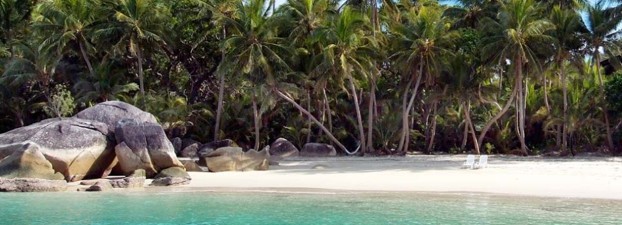 Doorila Cove, Bedarra Island, home site of Noel Wood.
Noel's success as a young artist generated tremendous interest in Bedarra Island. Newspapers loved the romantic image of a handsome young artist living alone on a beautiful tropical island. They never mentioned Eleanor, his lovely wife, who returned to Victoria with their two daughters, Virginia and Ann, after spending two intermittent years on the island with Noel.
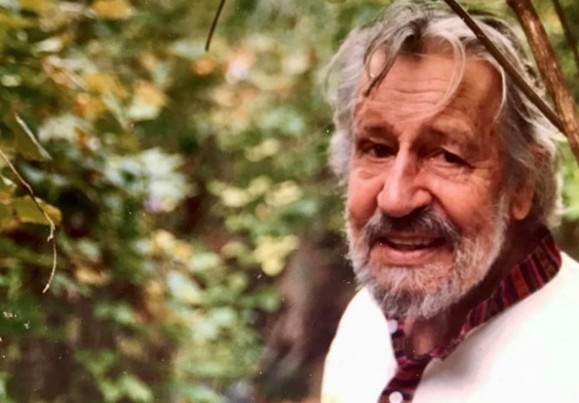 Noel Wood at Doorila Cove 1992. Image by Jenn Payne.
One of Jack Harris's syndicate partners, Eric Cawthorn, worked on the island at the same time. Together, Eric and Noel each cleared about two acres. Eric cleared the southeastern corner where today's resort stands. They found no signs of previous residents except three coconut trees planted by Henry Allason.
Eric tired of island life and sold his share to Frank Coleman from the Atherton Tableland. Young and strong, Frank worked hard with Noel and quickly built a tin hut. In 1938, his parents stayed with him along with an uncle and his family. The Colemans then bought out Jack Harris, who left the area.
Busst-Wood Rivalry
John Busst met Noel Wood at a commune in Victoria and came to Bedarra in 1940. He leased the southeast corner and suggested that having a few like-minded people on the island would lighten the workload and give Noel more time to paint. The relationship between Wood and Busst quickly soured and never recovered.
Beyond differing views on how to build and live, Wood had no respect at all for Busst’s art abilities. Initially, they fought over a girl living on Dunk Island. After Noel had been seeing her for some time, John Busst started rowing to Dunk to see her secretly as well. Both men enjoyed the company of young women.
Busst had inherited a fortune when his father died and had the means to do whatever he wished. He built a large mud-brick home on a site adjacent to Hernandia Beach. That was demolished in 1985 when Bedarra Resort expanded.
Charlie and Arthur Coleman began hosting paying guests and agreed to sell their land to two visitors: Englishman Dick Greatrix and Frenchman Pierre Huret, who created extensive gardens with exotic plants. During the war, however, it became increasingly difficult for them to live on the island. They sold their land to John Busst and his sister Phyllis in 1947 and moved to New Guinea to grow coffee.
In the early 1950s, while Noel Wood was abroad for three years, John Busst decided that Noel's land title wouldn't withstand legal scrutiny and claimed he could take ownership of the entire island. He took the case to court in a sadly opportunistic move, but justice prevailed and Noel won. This deepened the enmity between them.
Resort Development
The Bussts subdivided their land. The northern 86-acre lot, including the sandspit, went to Phyllis Busst, who sold it to Frank and Hazel Goldrich in 1949. They sold to Michael and Neura Hall (née Harriet Zander) in 1951. The Halls also painted, with mixed success, and lived on the island for about six years before selling to Ken and Cynthia Druitt in 1957, the same year John and his wife Alison left the island to live in Bingil Bay.
Ken Druitt and his de facto partner Mary built a small resort and stayed for 23 years before selling to TAA in 1980. TAA already owned Hideaway Resort on Dunk and purchased Bedarra Hideaway Resort, refurbishing it. The resort closed after the 1988 pilots' strike and was later wrecked by cyclones. The southern portion of the island was sold to Victorian farmer Colin Scott, who employed caretakers to manage it.
Noel Wood returned to Bedarra in 1957 after several years in Europe and the USA. He built an art studio and cottage on the opposite side of the island for privacy when visitors stayed. Chris and Joan Jackson served as caretakers on Colin Scott's property from 1958 to 1961, living in the Bussts' former house before moving to New Zealand. Lloyd and Laurie Abell then took over for five years, continuing property improvements.
Swede Tor Hulten purchased the Scott property in 1979 and transformed it into a small plantation resort called TorAnna (named after his mother Tora and foster mother Anna). Chris Dickson managed the resort until TAA bought it in 1981. Chris then managed the Hideaway Resort on the sandspit, and TorAnna was redeveloped as Bedarra Island Resort in 1985.
As the resort grew busy and Noel Wood's Council rates rose astronomically, he subdivided his land as a group title with seven lots, retaining his house and land on Doorila Cove. At age 84 in 1996, after 60 years on Bedarra, he left to live on the Atherton Tableland.
Artists in Residence
Noel Wood hosted several notable artists for extended stays. In 1975, Helen Wiltshire and her family arrived and remained for five years. Helen developed her own popular art style under Noel's guidance and became widely known after creating a small chain of commercial art galleries. One gallery remains in Mission Beach today.
After Cyclone Yasi destroyed Bedarra Island Resort in 2011, Sam and Kerri-Ann Charlton purchased and renewed it, creating a beautiful boutique resort. Sam had lived on the island in a residence his family purchased from Noel Wood at Coomool Bay in the mid-1980s.
The island remains idyllic, and the resort is deservedly popular and successful for those who can afford top-tier resort accommodation.
TIMANA ISLAND
The first Europeans to live on Timana Island were young artists Valerie and Yvonne Cohen, who purchased the island in 1939 from Barnardo's Homes. The charity had inherited it after Captain Allason's death. The price was meagre, just £50, covering arrears on rates and probate. They built a home with tank water supply and even a flushing toilet, living there much of the year and returning to Melbourne during the wet season.
Val and Von, as they were known, were notable modernist artists. Much of their work, like Noel Wood's, is now held by important art galleries. The Cohens spent winters on the island until 1965, when they leased it to tapestry artist Deanna Conti and her partner Bruce Arthur. After Bruce moved to Dunk Island in 1974 following their separation, the Cohens occasionally stayed with Deanna for a month at a time.
Deanna Conti has worked with textiles, sculpture, stained glass, kiln-formed glass, woven tapestry, and glass mosaics. She's one of Australia's most notable tapestry artists, renowned for elevating a traditional skill to a level that is significant in modern art. Deanna lived and worked on Timana Island for 40 years before moving to the mainland after Cyclone Larry.
Val and Von Cohen sold Timana in 1980 to Melbourne businessman Ian Veall for $500,000. Mr Veall died in 2016; his son Duncan was once a keyboard player with Mondo Rock.
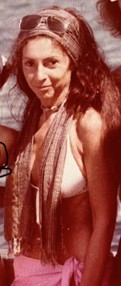 Deanna Conti image by Jenn Payne
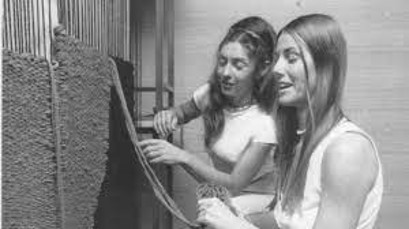 Deanna at loom (left). Image from Mission Arts
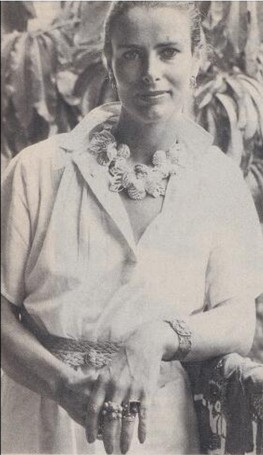 Helen Wiltshire, The Bulletin 30 Jan 1979.
The history of Dunk Island events is far too vast a subject to cover fully here, and the stories of characters who lived and worked on the island are well beyond the scope of this small story. However, you can obtain some idea of the massive array of island activities and fun people had here by visiting the Facebook page Mission Beach/Dunk Island Maritime Memories. This site has many pictures and stories collected by its administrator Jenn Payne. Jenn first worked for the Dunk Island resort in 1982. She now lives in Mission Beach and is a successful artist.
In 1990, Jenn earned her coxswain ticket. She had worked on the MV Quick Cat since 1986 and qualified as a skipper in 1998, going on to captain several large boats in the area: the Quick Cat in 1999, the 52-foot yacht Neptunius in 2000, and the catamaran The Other Side in 2006. Penelope Goward published a brief story about her, Jennifer Payne: Women Artists of Mission Beach, Volume 1, in 2022 on mbhs.com.au.
Jenny Whitehead shared memories of the Quick Cat operations with Jenn Payne:
Jim and Jenny Whitehead owned ‘Dunk Island and Barrier Reef Connections’ from 1990 to 1995, when they sold to Brian Canty. They operated the 24-metre catamaran Quick Cat on seven-day-a-week trips to Dunk Island and the outer Barrier Reef at Beaver Cay. They offered a semi-submarine and glass-bottom boat for coral viewing, dive tours run by Phil May, snorkelling gear, and buffet lunch. Australian Pacific Tours (APT) brought overseas guests from Cairns to Mission Beach seven days a week to experience the Reef or spend a day on Dunk Island.
Jim and Jenny also owned Quick Cat III, which ran day trips to uninhabited Bowden Island. Guests relaxed on the island, snorkelled, and enjoyed the provided BBQ. Once a year in September, the Quick Cat hosted a champagne breakfast at the start of the Dunk Island Billfish Classic Competition, always a festive occasion.
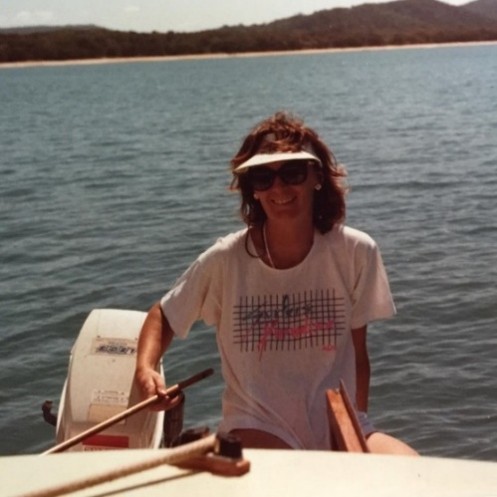 Jenn Payne on first trailer sailer Little Dream
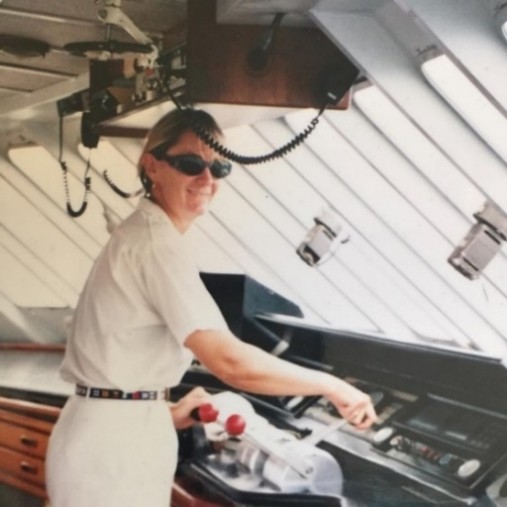 Skipper of Quick Cat 1.
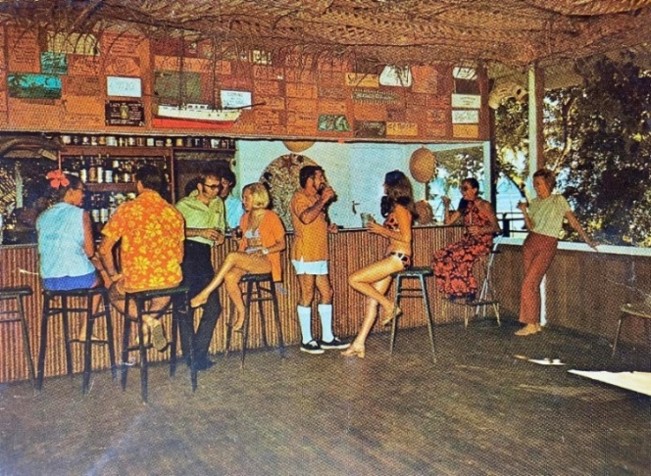 Dunk Island Resort Bar 1975 with many boat signs on the wall.
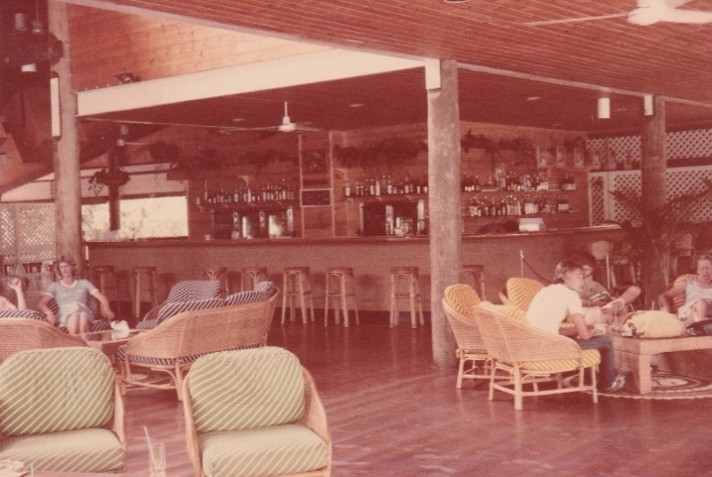 Dunk Island Resort Bar date unknown, from Harvey Collection
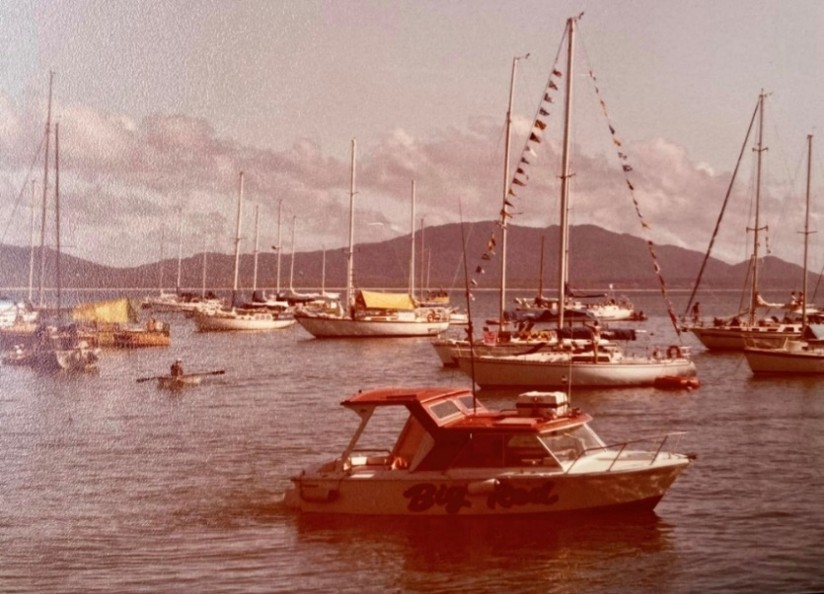 Yachts anchored in Brammo Bay after arriving in the Townsville to Dunk Isle yacht race. The motor vessel in the foreground is “Big Red” which did the Dunk-Bedarra Island transfers in the 1980s. Photo courtesy of Tony Harker.
Yacht races were held annually at Dunk Island for years as shown in the image above. Another popular event was the annual Dunk Isle Classic Billfish Tournament which ran for around 20 years starting in the mid-70s. It was run in September each year. For many years, a horse race was held on Brammo Bay Beach every year on Melbourne Cup Day.
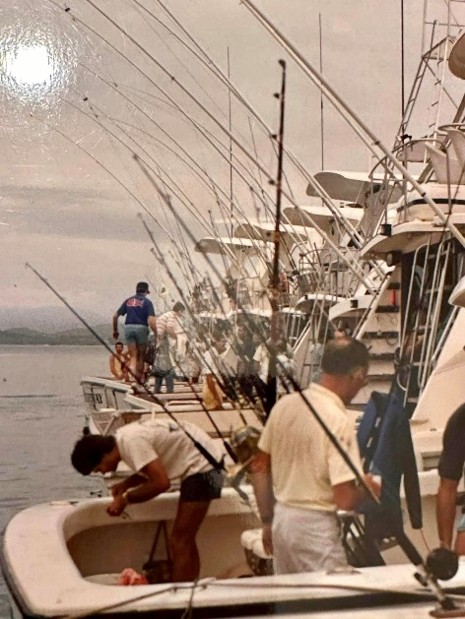 Almost ready to go
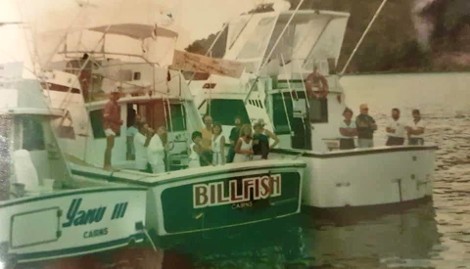 1984 tournament with people partying at the end of the day on their boats
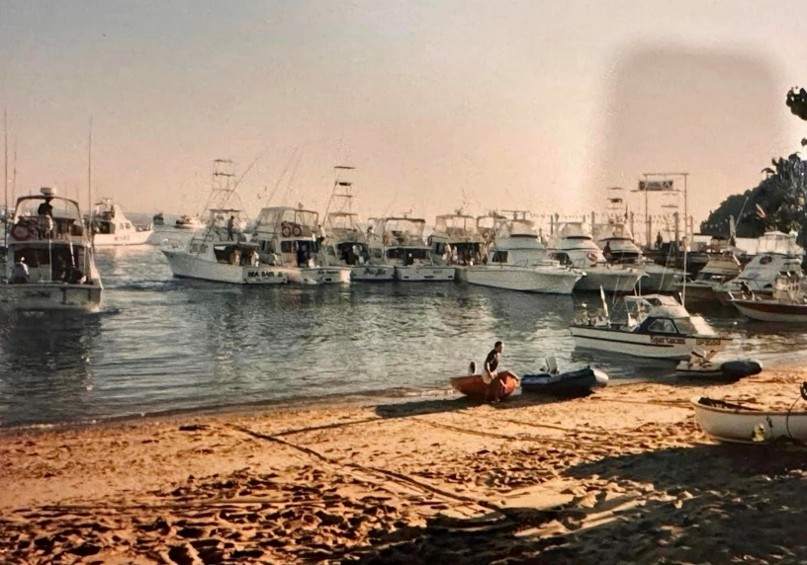
Always such a fun time at Dunk! The game boats would “raft up” alongside the jetty after the days fishing. Always a party on every boat's back deck!
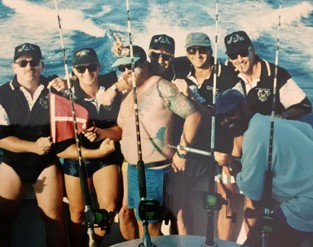 1991 crew in that year's shirts with Danny Dade (centre) on Hooker. This crew obviously tagged a fish as the guy on the left is holding the T flag!
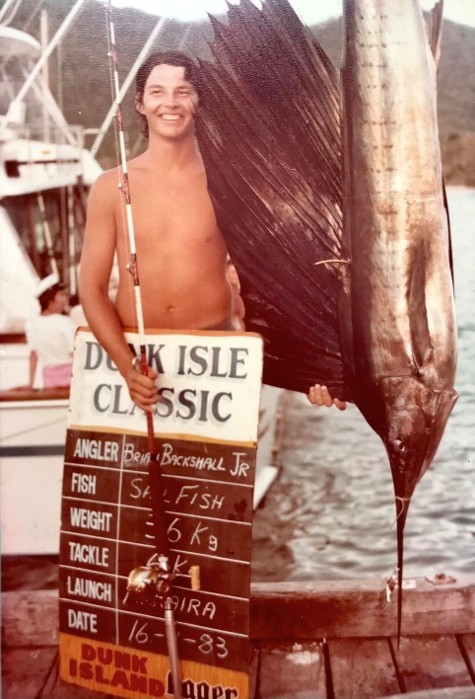 Winner Brian Backshall, 1983 Billfish Tournament Dunk Isle Classic.
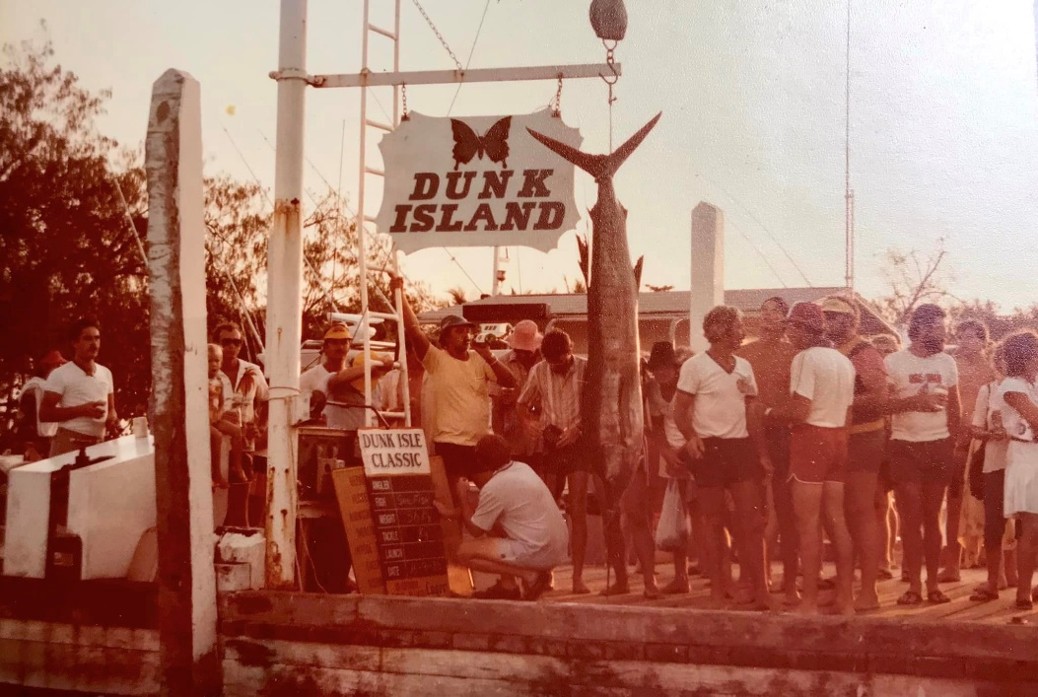 Winner Brian Backshall, 1983 Billfish Tournament Dunk Isle Classic.
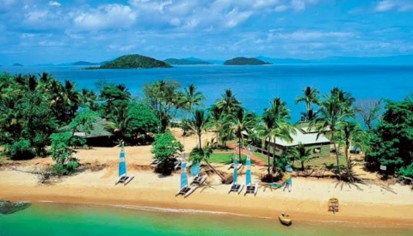 Aerial view of the Sandspit with the original jetty bar on the left & the 2nd water sports building on the right
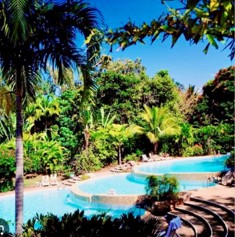 Dunk Cascade pool 1980s.
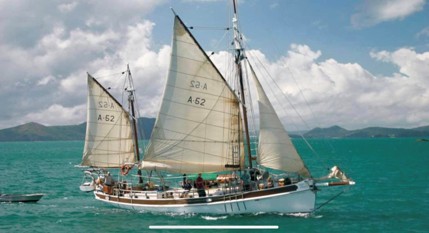 Sunset sailing cruises around the islands were also popular. Jenn: “Ise Pearl” a beautiful pearling lugger which was restored in a back yard in Bingil Bay in the early 90s. Purchased in 1989 by local skipper & resident Warren “Sparrow” Burton. Warren as a shipwright purchased “Ise” as a wreck in the Escape River. He patched a large hole in her side and sailed her down to Cairns where he trucked her to Bingil Bay. After restoring her stunningly, and re-launching Warren chartered her in the local area before relocating to the Whitsundays.
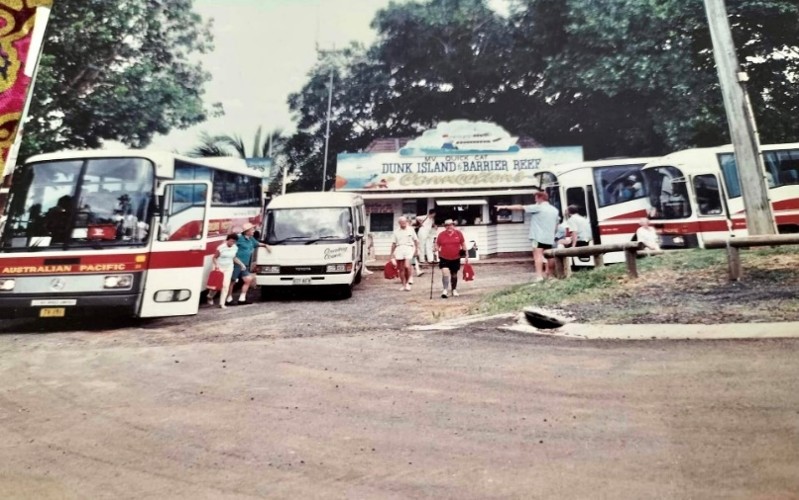 Australian Pacific tours brought busloads of tourists to visit the reef and stay on Dunk Island
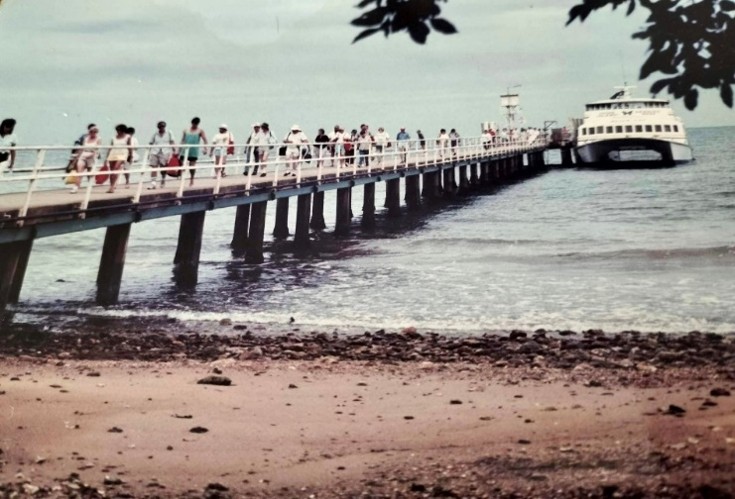 Quick Cat at Clump Point jetty. Busy times
Further Reading
James Porter’s Family of Islands is well researched and provides interesting stories on the people who lived on the islands and on the flora and fauna. James G. Porter, A Family of Islands: Dunk and Bedarra Island group, North Queensland, Boolarong Press, 2000.
An equally valuable book is Penny Olsen’s wonderful biography of the Cohen sisters of Timana Island: Penny Cohen, Artful Lives: The Cohen Sisters, Melbourne Books, 2024. Penny’s impressive research uncovers much of the history of the islands and these notable artists that was previously unpublished. Her cousins, Val and Von, provided information that was inaccessible to others. Penny had extensive records and collections to draw on and was able to interview these artists late in life.
David Heenan published Australia’s Great Barrier Reef: Dunk Island and Beaver Cay (Glenmede, 1994), a promotion of Dunk Island and that colours in many parts of more island recent history.
The Mission Beach Historical Society Collection at mbhs.com.au includes several histories of island residents written by Ken Gray:
Our Own Gatsby: Hugo Brassey of Dunk Island, H002, 2021
The Banfields of Dunk, Mission Beach Historical Society, S001, 2022
The Artful Activist: How John Busst Saved the Great Barrier Reef, H007, 2021
Artists of the Islands: Volume 1, Noel Wood, H019.1 Version 2, 2023
Artists of the Islands: Volume 2: The Cohen Sisters, Val and Von, H019.2 Version 2, 2023.
|
Download PDF |