
Author: Ken Gray
Editors: Margaret Remilton, Rhonda Jarvis, and Diane Bull.
 |
Abridged Story | |
Full Story |
In the tropical heat of Mission Beach, far from the cobblestoned streets of Denmark, the Wildsoet family has had roots planted for more than a century. Only the Porters and the Wildsoets can claim ancestors of the same name who arrived here more than 110 years ago, settling in 1908. Today, three streets bear their name: quiet monuments to a family that should never be forgotten.
The story begins with darkness. On Langeland Island near Denmark's coast, in the market town of Rudkøbing, Johan Wildsøe took his own life in 1869 at only 51 years old. Whether his two sons, Marcus and Lorentz (Lars), fled the grief, the constant European wars, or simply the struggling economy, we cannot know. But in August 1870, they joined the crew of the Christianshavn and sailed to Queensland, leaving behind everything familiar.
Marcus was 24, Lars just 18. Two years later, they sent for their mother, Catherine Jacobson, who had been selling fruit in Rudkøbing's markets. Imagine her courage, a widow in her fifties, boarding the Humboldt to cross the world to sons she hadn't seen in two years.
The family name itself evolved in this new land. Wildsøe, with its Nordic ø, became Wildsoet, easier for Australian tongues. After exhaustive research, including a journey to Denmark, family historians determined that every Wildsoet in Australia descends from these two brothers.
Marcus and Lars worked on coastal traders. Marcus became a boat pilot with his own vessel. In 1880, he married Penuel Smith, a Scotswoman from Inverness. They settled in Cardwell and had six children.
Tragedy stalked the family. While clearing a trail for the phone line from Kennedy to Mt Surprise, Marcus cut his foot with an axe. The wound festered, and he died of septicaemia in 1894, only 48 years old, leaving Penuel with their young children. Lars fared no better, drowning while trying to cross a flooded creek in 1886, just three months after his son was born. He was only 33.
The first Wildsoet to live here was Christian Magnus (Chris), born in Port Douglas in 1883. He was working in the Hull River area close to South Mission Beach in 1908 with his timber-getting brother-in-law, Jack Bunting.
Chris became the bridge between old world and new, between Indigenous and settler. Growing up near Aboriginal children, he learned three of their dialects. On his 82nd birthday in 1965, an anthropologist recorded Chris's knowledge before it was lost forever.
That interview, published as The Wildsoet Interview, is an important historical document preserving Indigenous testimony about the massacres following the wreck of the Maria in 1872. Chris was also friends with Ted Banfield of Dunk Island. Together they went fossicking, and Chris discovered a shield from Edmund Kennedy's doomed 1848 expedition and a rusted rifle at Kennedy Bay, the firearm the Captain of the Maria used to fire on the Djiru people.
In 1910, Chris married Maud Bunting and worked as a timber getter. He soon had his own bullock team and selected 350 acres near what's now East Feluga in 1912.
When the 1918 cyclone came, Chris rushed back from Townsville and was first to arrive at the Hull River Aboriginal Settlement, organizing an emergency transfer of the severely injured Mrs Kenny to Townsville Hospital.
The couple moved to Tully in 1926, where Chris became a pillar of the community. In 1959, he was chosen to hold the ribbon at the opening of the Banyan Bridge. He helped Council find the route for the road to Mission Beach, via Wildsoet Gap. Chris died in 1966, aged 83.
Chris and Maud's son Albert (Mick) became a Holden mechanic in Tully and married Kathleen Perske. They had one daughter: Dawn, who enlisted in the Royal Navy in 1966. When Mission Beach sought a swimming pool, Dawn was an advocates and wrote to the Prime Minister pleading the case. Today, Dawn's son Mitchell and his wife Desley live in South Mission Beach with their three children, not far from where Dawn herself lives part-time. Four generations are connected to this place.
Three more of Marcus Wildsoet's children lived at Mission Beach: Joe, Carrie, and Lou. The latter two married into the Garner family, binding two pioneering families together. Lou Wildsoet was a skilled blacksmith who married Lizzie Garner in 1908. They had five children. Lou came with the Garners in 1909 to help set up and operate the Cutten sawmill. But he died of cancer at only 48, leaving Lizzie with the five children.
Their eldest son Bert was just ten when the 1918 cyclone struck. His memories give us one of the few firsthand accounts of that nightmare: the house blown to pieces until only the floor and stumps remained, their water tank later found at Kurrimine Beach. With only three years of schooling, he went to work at Wangan Timber Mill at 12 years old. By 16, he had his own bullock team hauling timber. He became a champion axeman in wood chopping competitions and an accomplished rugby player.
Bert married Lillian Rixon and, and had five children, Norma, Betty, Beryl, Kay and Robert. Their four daughters all attended Mission Beach School in its opening year, 1953. In 1958, Bert and Lillian purchased the Post Office and store from the Rick family. Lillian became post-mistress. Bert retired in 1966 after a tree fell on him. Lillian lived to be over 100 years old, dying in 2020.
Lillian and Bert’s son, Robert, became a plumber with Pat Dineen and married Lynda Porter, daughter of Joan and Laurie Porter. Robert and Lynda had two children, Terence and Brendan. Terry was tragically lost at an early age in a car accident. Brendan married Linda Grasso, and they live today with their children in South Mission Beach.
Betty Howles, daughter of Bert and Lillian, remembers Garners Beach when she was five, and Brookes Beach where they farmed pineapples and bananas, milking four cows every morning before the hour-long bike ride to school. We had a wonderful childhood at Bingil Bay with no phones or electricity, she recalls. We made our own toys and games and had such good fun. Later they got a generator for power at night, luxury! She remembers the excitement of weekends when they'd ride on the back of Bert’s truck to El Arish for the movies. The old chair placed on the truck bed wasn't even fixed down. Two shillings bought a box of Jaffas and a small ice cream - pure joy.
Catherine, always Carrie, married Ted Garner junior in 1908 and had eight children. Carrie's life was cut short in 1937 when she was 49 years old, dying tragically in a car accident on the Bingil Bay-El Arish Road.
Joe Wildsoet lived most of his life timber getting and fishing in Mission Beach. He married 16-year-old Emilie Louis in 1905. They had two children, but the marriage didn't last. Their son Arthur, called Snowy, enlisted in 1939 and was killed on the Kokoda Track at 34, another life cut short by tragedy.
Today, Brendan Wildsoet and his family remain the only family in the district bearing the name Wildsoet. He works as a carpentry contractor with his wife Linda and their children, the latest generation building rather than felling, creating rather than clearing.
The Wildsoet family came from an island and settled near islands. They left cobblestones for mud tracks, markets for bushland, the known for the unknown. And they stayed and made good, not because it was easy, but because some people, once they've claimed a place, become part of it and make it a better place. Their descendants have spread far and wide over time yet they retain a strong bond with the small town they started out in.
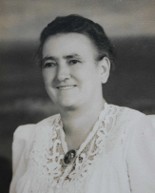 Lizzie Wildsoet nee Garner.
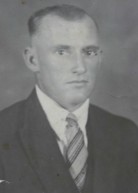 Bert Wildsoet.
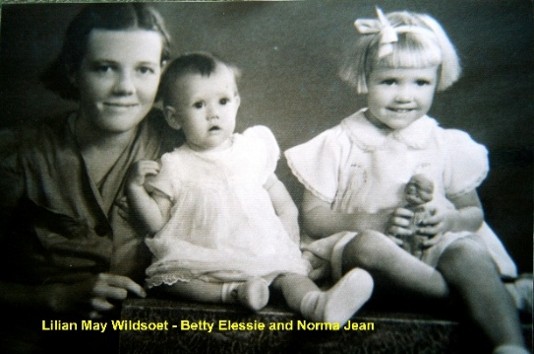 Betty and Norma Wildsoet. Images from Kay Stephens.
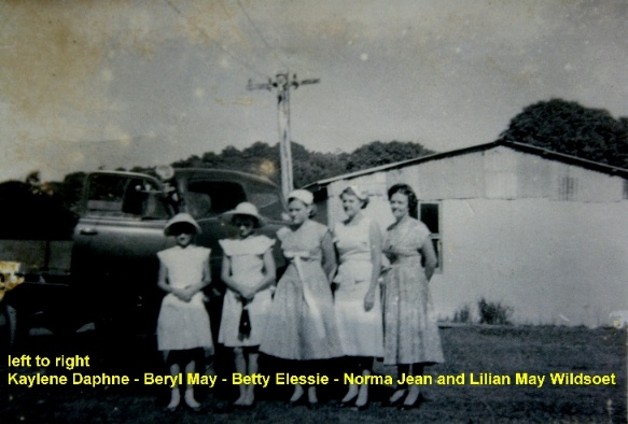 Kay, Beryl, Norma & Lillian Wildsoet.
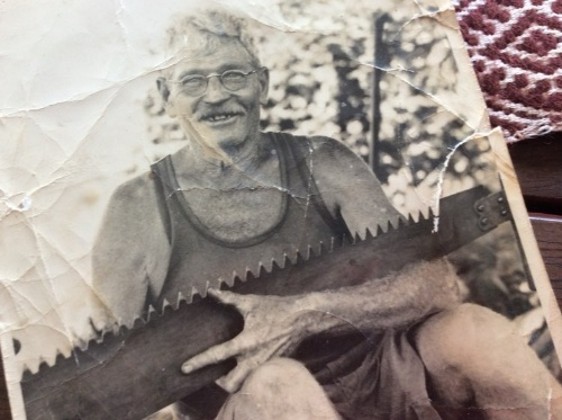 Chris Wildsoet, proud timber man. Image from granddaughter Dawn.
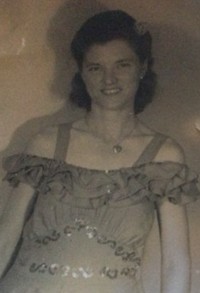
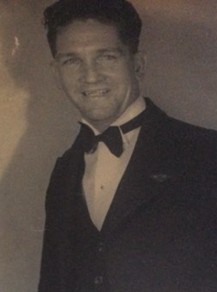 Gwen (Kathleen) and Mick Wildsoet. Images from Dawn Todd.
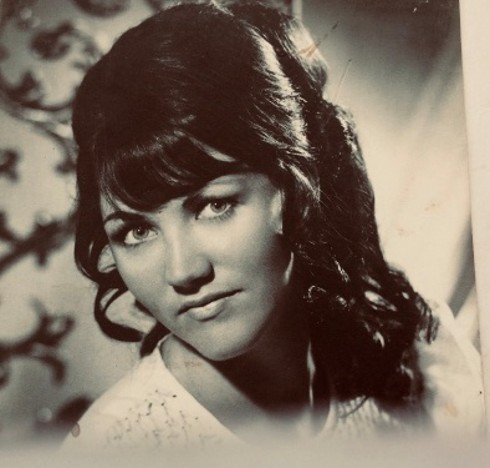 Dawn Wildsoet.
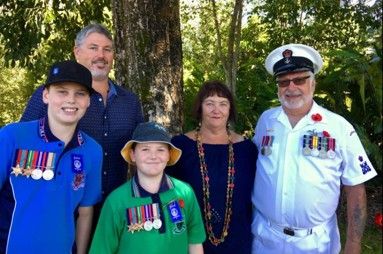 Dawn Todd nee Wildsoet with son, Mitch and grandsons.
|
Abridged Story | |
Full Story |