
Author: Ken Gray
Editors: Margaret Remilton, Rhonda Jarvis, and Diane Bull.
 |
Abridged Story | |
Full Story |
Bananas. Yep. That's how Mission Beach clawed its way back to life in the 1950s after most residents left the place after the 1918 cyclone. The Rick family had a big part to play in the town’s banana-led recovery.
This is an abridged story of Frank Rick (1918–2000), his wife Marion McEachan (1922–2019), and their immediate family during their years at Mission Beach, Queensland. The full version of the story has images and more details of the family history.
RESTARTING THE TOWN
The Ricks arrived in 1951 and became a key to the town’s renaissance. They stuck doggedly to banana farming and made it work through effort and innovation where many failed. Yet they did not merely carve out a good living. They worked equally hard for vital volunteer organisations to build a thriving town.
In the 1950s, governments provided little. Mission Beach desperately needed a school, and when it finally arrived after relentless lobbying, the community got a one-room building and a single teacher. The Parents and Citizens Committee had to clear the land, build fences, empty the toilet pans, and raise funds for everything else, yes, everything: books, desks, play equipment, fans, mowers… Winning the school was a struggle; retaining it was harder still. Student numbers fluctuated wildly for two decades. The town hung in the balance from 1953 until 1973 and residents had to work tirelessly to make it succeed. In 1970, of 14 families with school-age children, ten were banana farmers.
That's where resilient families like the Ricks came in. When they arrived, their land was smothered in forest. All the family helped to clear it. It was backbreaking work with no modern equipment, a twelve-hour day in daylight hours. In peak times, four of them, Lachie, Frank Jnr, Charles and Marion, could pack three thousand cartons in a week. Then, somehow, they found time to work for the P&C and other organisations.
Perhaps that's just how the 1950s were. Yet the Rick family story reveals truly amazing people: as if a banana farm wasn't enough, Marion Rick purchased the General Store and Post Office soon after arriving and operated a bank agency and the phone exchange for long hours as well.
BEFORE MISSION BEACH
This was a family descended from German folk on the paternal side and Scots on the maternal, rather like the British monarchy, come to think of it. Perhaps their story deserves an equally grand title: Bonnie Wee Marion Meets Handsome Herr Frank.
Marion Legget Oribin McEachan made an impression the moment she landed in Australia. The Courier Mail couldn't resist her. On 23 January 1938, they ran a portrait piece, fascinated by her verve and boldness, and enamoured of her broad Scottish accent. Sixteen years old, she had sailed alone from Glasgow to visit two sisters already settled in Queensland. Whether she would follow their example and marry and stay on, the paper speculated, Marion had not quite made up her mind.
Their speculation proved prescient. Not long after, Marion and her brother-in-law Frank Rick were an item.
Marion had contracted TB in Scotland and was advised by her doctor to migrate to a warmer climate. The warmth of the tropics, combined with what people would later simply call her wicked determination, eventually enabled her to beat the disease.
Frank Rick was born in 1918 near Mackay, second youngest of seven in a German-Australian family who moved to a cane farm at Euramo when he was seven. His education, as he dryly described it, was a half-half affair: two years at a convent where he studied almost nothing, followed by sporadic attendance at primary school between the ages of ten and twelve. He would bolt whenever asked to empty the toilet, a job that apparently offended his dignity more than truancy did.
At twelve, a steel railway sleeper crushed his ankle. The wound turned gangrenous, leaving him bedridden for two years. Those years weren't wasted. Frank taught himself to play any tune by ear on mouth organ and piano, a skill he later deployed at Tully dances, and developed a remarkable knowledge of native flora. By sixteen, his ankle had healed enough for cane and timber cutting, brutal work he would do until 1950.
Marion and Frank married in 1939. He was 21; she was 17. They had four children: Lachlan McEachan (Lachie, 1940), Frank Jnr (1942), Charles Edward (1944), and Sheena Marina (1946). By 1944 they had moved to Tully, and in 1951 an exciting opportunity arose: a banana property at Mission Beach.
Marion hesitated. She'd heard evil stories about Mission Beach, rumours of drunken husbands, roughness, violence. She agreed to move on one condition: Frank had to promise he wouldn't become like the neighbours.
In May 1951, they bought a house with an attached Post Office, General Store, and dance hall from Ted Boyett. The store ran at a loss; the post office received mail only twice a week, and the dance hall, while it had excellent flooring, was not a thriving enterprise. Marion's pragmatic approach was to try to make it work and simply close up if it failed. At least they'd have the house.
A NEW LIFE
It was a bold move, buying Ted Boyett's business while simultaneously clearing land and planting bananas. Marion had her hands full in a way that defies description. Four children to rear aged five to eleven, bananas that urgently needed packing, and the businesses to run. That was just the beginning.
In November 1951, a telephone link connected Mission Beach to El Arish via Granadilla, and suddenly Marion had a phone exchange to manage as well. In 1952, she opened the first Commonwealth Bank agency in the district and established a Mobil Oil fuel depot, complete with a bowser beside the General Store.
On'ya Marion!
Frank, meanwhile, held the mail contract and made regular runs to El Arish. He transformed this into something more useful for the community: taking orders for bread and meat from residents who couldn't get to town often and picking up precious ice blocks in the days before electricity. His route included the Johnstone Boys Camp at the south end of Narragon Beach, setup in 1927 by sugar mill workers. The midden of broken bottles behind it, more than 30,000 by one estimate, told its own story of those slack sugar-season days.
In 1954, Frank purchased a sawmill from Tim Donnelly, relocated it to Porter Promenade, and ran it with partner Herb Anderson until 1958. The mill's specialty was banana and pineapple cases, with some crates going to the Great Northern Cannery in Cairns.
The family had collected a few nicknames for Frank Snr over the years: Fritzy, Boss, GrandBoss, Dearie... They'd started out living on the farm in a shed with living quarters before building a proper house near the General Store and Post Office.
By 1958, Marion sold the Post Office and store to the Wildsoets. She still ran the fuel depot and spent more time on the banana farms. In 1962, Frank Snr formed F Rick and Sons, left the farms in his sons' hands, and took work with National Parks. His first project was building the track to the foot of Wallaman Falls. For the next dozen years, his handiwork left its mark across North Queensland: tracks at Bicton Hill, Dunk Island, and many other places. Several huts he designed and built still stand in the forests. Frank returned to farming in 1974 and worked the land until 1995, when he was 77.
In 1977, Marion built holiday flats on Porter Promenade, naming them Ceud Mile Failte meaning a hundred thousand welcomes in Gaelic, honouring her Scottish heritage.
BANANAS
Their farming ventures grew steadily. Their first property was a 40-acre block on Rick Road, purchased from Kevin Hanrahan, badly run down, yet that didn't deter them. In 1952, they added an 84-acre farm on Boyett Road, previously owned by the Myers family.
The third farm proved the most difficult to acquire. At 283 acres on the El Arish–Mission Beach Road, purchased from John Harej, the deal took years because the banks kept insisting the land was unsuitable for bananas. They would eat those words spectacularly. Frank Jnr grew a world-record banana bunch on it: 236 pounds 4 ounces.
With three farms, the three Rick brothers each managed one, all trading as F Rick and Sons until 1985. Frank Jr left the partnership in 1976, and Frank Snr took over the Mission Beach–El Arish Road farm, later share-farming with Noel and Diane Wagner. Lachie and Lyn traded as L&L Rick and Son, farming the Rick Road property with their son Colin, until they sold in 1995.
Starting a banana farm in those days followed a regular pattern. They'd clear the land without removing tree stumps, let it dry for three months, then burn it. After four or five years, most stumps had rotted; the toughest hardwoods were split into fence posts.
From the mid-1960s to mid-1970s, they harvested for only five months of the year, May to September. Prices peaked in those months, and the cooler weather meant fruit survived the week-long journey to southern markets in better condition. At that time, Mission Beach and El Arish together formed Australia's biggest banana-producing area, though Tully later claimed that crown. Refrigerated transport eventually cut the journey to three days, a revolution that changed everything.
The roads of the era were a story in themselves. It took up to an hour by car to reach Tully, 20–30 minutes to El Arish, almost two hours to Innisfail. During the wet season, chains were needed on some roads. Charles Rick once noted it took him about an hour to ride his bike to Tully, roughly the same time as going by car.
Town water didn't arrive until 1973; electricity not until 1963. Before that, they used kerosene for lights and fridges, or simply ice. Water came from rainwater tanks or bores. At night, families gathered to listen to the radio: Dad and Dave, Blue Hills, Bob Dwyer. The children had a flat-bottomed punt for fishing on the nearby reef. Bonfires on the beach during school holidays were common when campers stayed in droves.
Throughout her remarkable 97-year life, Marion visited Scotland several times, usually with other family members. Her first trip back was in 1961 to see her ailing father, but tragically, he died as she was beginning her journey.
When researching Marion Rick's life, one word surfaced again and again: feisty. That was evident at a public meeting in the 1990s that erupted into a heated debate. The issue? Coconuts at Mission Beach. Two camps had formed. One side argued the palms were invasive weeds, creating a monoculture that choked out native trees. The other insisted they were beautiful, tourist-friendly, and quintessentially tropical. As voices grew louder, the second view gained momentum. People began claiming the coconuts had always been there, that they were practically native.
That's when Marion moved. She rose slowly from her seat. The room fell silent.
Then she spoke, her voice cutting through the stillness with unmistakable authority. She had lived in Mission Beach since 1951, she said, and much of what was being claimed tonight was simply false. When she arrived, there wasn't a single coconut palm at Mission Beach, not one. They grew at Bingil Bay, yes, planted by the Cuttens as cultivars. But native? Always been here? Absolutely not.
You could have heard a pin drop. No one spoke. The debate was over.
That was Marion Rick, a woman who certainly was assertive; and respected… for she was known to argue strongly in service of her community and for the causes she held dear. Cross her at your peril. Ignore her at your own risk.
Frank Snr survived several life-threatening illnesses over his years: gangrene, scrub typhus, and two cancerous growths on his back. But as his daughter Sheena wrote in his eulogy, the last one was just a little stronger than he was.
Her words captured him perfectly:
There is so much more that could be said. Frank was many different things to those of us who knew him – a loyal friend, a proud father, a loving husband, a larrikin, a shy and thoughtful man, a hard worker, not too good with the finances, patient, impatient, charming… All of these things and others were true of him. A huge character, a good man true to himself. This was the essential Frank, and he would not be pleased if we fussed too much today.
He went with a shrug of his shoulders and a final wink.
CHILDREN
Lachlan McEachan Rick OAM (1940 - 2025) & Lyn Lee
At sunrise, young Lachie and his brothers were already crafting wooden banana cases in the early light. An hour's labour earned them three pence a case, precious pocket money that made the early mornings worthwhile.
Before the local school opened, Lachie and Frank travelled to Maryborough for schooling. Once the Mission Beach school was established, Friday became adventure day: the boys pedalled to Tully for Manual Training classes, occasionally catching a lift home.
By 1955, fifteen-year-old Lachie had left school for the family farm, snigging timber for the sawmill. Then Cyclone Agnes flattened the banana crops, and when plants finally matured again, oversupply drove prices below production cost. It was a tough start to his farming career.
From 1957 to 1962, Lachie worked weekdays at the Hull Timber Ply Mill at El Arish while tending bananas on weekends. When F Rick and Sons formed in 1962, the three Rick brothers each purchased a quarter-share in two farms, £1,500 cash each, plus a £2,000 overdraft. Prices improved, and through long hours they cleared the debt in five years.
Romance had begun at the El Arish timber mill, where Lachie and Lyn worked side by side, though they had first met years earlier during Christmas holidays when Lyn's family camped on the beach. They married in 1963 and brother Frank built their home on the Rick Road farm using beautiful spurwood logs. Their children were Leslee, who married Barry Collins, and Colin, who married Jenny Shepherd.
They invited the Department of Primary Industries to establish research trials on their farm from the late 1960s through the 1980s, running weed, fertilizer, and disease control tests. Yellow sigatoka and sooty mould were nearly eliminated, though yellow sigatoka remained a persistent adversary.
Lachie received the Medal of the Order of Australia in 2004 for his service to the Cardwell Shire through emergency services and school groups. He passed away in 2025, ending 62 years of married life with Lyn.
Frank Rick Jnr & Lucille Kann
Frank trained as a carpenter and served his apprenticeship in Maryborough from 1957 to 1962. On returning, he worked for the Nisula kitchen fabrication business in Tully. He and Lucille married in 1967. Frank built three homes here: one for his own family, one for Lachie and Lyn, and one for Charles and Dorothy.
Lucille came from the North Burnett west of Maryborough. Her father Irvin, wounded at the Battle of Shaggy Ridge in New Guinea in 1944, had cleared a 180-acre settlers lot at Mena Creek from scratch and built a successful dairy farm. Lucille had met Sheena Rick at Innisfail High in 1963, and both went on to Kelvin Grove College in Brisbane to train as teachers. A school excursion to Kurrimine Beach, she met Frank.
Their engagement, however, cost Lucille her teaching career before it really started: the school at Mission Beach discovered she was engaged and rejected her application. She made her peace with it in the most practical way possible: she married Frank, became a banana farmer, and loved it.
After leaving the Rick farming partnership in 1976 and spending six years building in Bundaberg, Frank and Lucille returned to farming at Mena Creek in 1982. When the Department of Primary Industries told them organic banana farming was impossible in the wet tropics, Frank and Lucille looked elsewhere: to American agricultural literature and eventually to the experts themselves, several of whom later visited Mena Creek. They grew organic bananas successfully at Mena Creek until 2019, nearly four decades of principled farming.
Frank recalled a story when he was young. His father called him Snowball due to his blonde hair:
Herb Anderson was Dad’s mate, and they often went to Tully on Friday afternoons to have a few beers. I was in Tully once when they were ready to go home and they told me to throw my bike in the back. We were almost home, going along Porters Straight and the silly buggers ran out of petrol. They had a carton of beer and were not at all upset at this situation and told me to ride home and bring the truck back with some petrol …
I was delighted to have an opportunity to drive the truck, but it was pitch black, and I couldn’t even see the dirt road. I almost felt my way home – when I hit the wild raspberry branches on the side of the road I knew I was veering off. I was only 14 years old but made it home OK and returned to find them laughing on the side of the road, well into the task of consuming their carton.
Charles Edward Rick (1944 - 2023) & Dorothy Ruth Green
Dorothy Rick (née Green) marked her 70th birthday by writing a memoir, continuing a tradition of preserving her family's history that she maintains to this day. Early in her life, her parents offered advice that would prove prophetic: When you get married, you must go where your husband can get work, her mother Phyllis counselled. Her father Victor added his own wisdom with characteristic bluntness: The further you can get away from relations, the better.
Dorothy came from a nomadic Queensland family, born in Blackall and raised wherever her father's timber-trucking work led. She met Charles at a church camp in Kuranda on Australia Day weekend in 1961, and they married in May 1965 in Cairns.
They made their home in the shed on the Boyett Road farm, accessible by rough dirt track crossing two creeks. There was no electricity, no running water, a long-drop toilet, swarms of March flies, and scrub surrounding them on all sides. They hung a mosquito net over the kitchen table to eat in peace. Power arrived in September 1965.
Charles's innovative spirit transformed the banana industry. With his brother Frank’s help, he invented the A-trailer (or centreboard cutting trailer), then enhanced it with a hydraulic lift that raised the platform close to the banana bunches. That enabled smaller people to hang fruit regardless of their height. Within a short time, the industry had adopted it. He was also among the first to create a banana packing wheel. Neither innovation was ever patented.
In late 1983 at El Arish, Charles became the first person to rail bananas on pallets. When he arrived at the rail head, other farmers flatly told him to take his pallets and load somewhere else. Within months, the entire industry had followed that lead as well.
Charles and Dorothy raised two sons - Russell (1966) and Wayne (1969), and never pressured either into farming, encouraging them to see the world first. Russell found his calling in hotel management; Wayne became a motor mechanic.
At her 70th birthday party, Dorothy said in a short speech, I will not be around for another 70 years, but if the years ahead are as good as the ones gone, I will have had a very happy life. That says it all, Charles and Dorothy found the right match in 1965. The Boyett Road farm was leased to Dole in 2006, then to Steve Lizzio from 2016. Dorothy still lives on the property and is well supported by Steve.
Sheena (1946 – 2002) & Eddie Lachlan McEachan
Sheena came to school late; there was no local school, but it proved no obstacle. She passed her Scholarship examination on schedule, was dux of her class, and won a scholarship to Kelvin Grove College in Brisbane, qualifying as a Home Science Teacher. She later taught at Ingham, Babinda, and interstate before returning to Good Counsel College in Innisfail.
Eddie McEachan had grown up in Scotland, where his family connection to the Ricks remained strong. He qualified as an accountant and immigrated to Australia in 1967, stepping off the train at Tully on Christmas Day. He and Sheena, meeting for the first time on that platform, had decided within a week that their futures lay together. As Eddie would later reflect, "How lucky can you get?"
They married in January 1969 and made their home successively in Newcastle, Melbourne, and Sydney, before eventually returning north to Innisfail when Eddie became CEO of Johnstone Shire Council. They had two sons: Andrew, now in Perth, and Fraser, in Canberra. Nearing retirement age, Sheena and Eddie went to work in Niue, a tiny Pacific island north of New Zealand, through Australian Volunteers Abroad, he administering the island, she teaching. Sheena fell suddenly ill and they returned to Australia immediately. Eddie lost her not long after.
When she passed away in 2002, the Home Economics teachers in Cairns established a memorial bursary in her name. Her husband later reflected that she had sacrificed her own career advancement repeatedly to follow his, yet still earned an education degree, then a master's, then began a BA in English Literature in anticipation of writing in retirement. At the time of her death, she was researching pioneer settler, Rupert Fenby. Had she lived longer, she would undoubtedly have become one of the region's prominent historians.
Sheena was remembered by those who knew her as someone whose late start in a country schoolroom had led, by remarkable turns, to a life lived with great purpose, many achievements, much love and considerable adventure.
HISTORIANS
The Ricks didn't just live their history; they captured and preserved it. Marion was first to take up the pen, leaving behind records including the text from fallen soldier Syd Harris's headstone plaque. The plaque itself has long vanished, but her transcription endures. She also wrote a memoir about the famously unconventional early settler Rupert Fenby, who worked naked in the forest and kept a bottle hanging from a tree as a visitors' warning.
Dorothy had the same instinct as her mother-in-law, maintaining meticulous folders of photographs, eulogies, newspaper clippings, personal memoirs, and family trees. Lachie and Lyn also recognised the value of their lived experience and systematically preserved it. In 2003, for the school's 50th Anniversary, Lachie and Lyn joined the committee that produced a 164-page history, now an important reference for the Mission Beach Historical Society. Lachie went on to self-publish a 27-page memoir in 2017: Mission Beach as I Remember It, documenting the banana industry, early residents, and holiday-home owners during the district's formative years.
Sheena began recording history too, obtaining the original diaries of pioneer George Webb and transcribing them before she was struck down far too soon.
VOLUNTEERS
Frank Snr – Building Infrastructure
Frank Rick understood that remote communities survive on ingenuity and effort. When Mission Beach wanted a tennis court in 1954, the Johnstone Shire Council offered little more than fence netting. Frank and the other founders organised dances and euchre tournaments, held working bees that became social events, and built the court themselves. The first dance alone raised £24/2/4. By 1955, many locals had joined the working bees and in late 1957 the court was completed.
Frank’s community work extended far beyond tennis. He helped dismantle a shelter from East Innisfail State School and rebuild it piece by piece at Mission Beach. In 1964, when the town needed a Progress Hall, Frank partnered with John Parsons on the construction. When money ran out for timber, Marion quietly acted as a guarantor at the mill.
The Rick family's involvement with the P&C was dynastic. Frank served as President in 1956, Marion as Treasurer in 1959, daughter-in-law Lyn as Secretary for four years in the 1970s, daughter-in-law Dorothy as Treasurer for another four years, and son Lachie as President for two years in the late 1970s. Together they built a teacher's residence, an adventure playground, organised cabarets, and pioneered the Banana Festivals, the first, in 1979, netting $3,800 for the school. Regular card evenings led by Frank Snr at the General Store became community institutions. Dances filled their dance hall in Mission Beach, and also in El Arish and Tully.
Marion Rick OAM - A Force of Nature
If Frank Snr was Mission Beach's builder, Marion was its connector, its advocate, and its relentless champion. She recruited different volunteers each year to don the Santa suit for local children's Christmas celebrations, a tradition that endured for years. When Mission Beach's roads proved virtually impassable in the wet season, Marion recruited John Parsons and marched to Innisfail to meet the Minister for Main Roads. Major improvements followed. Working with the Electricity Board, she and Parsons then determined where power lines should run, bringing reliable electricity to a town that had long made do without it.
Marion's sixty-plus years with the Queensland Country Women's Association began with a simple invitation from her neighbour. She served locally, regionally, and eventually became a Life Member of the Country Women's Association of the World, attending its conference in London in 1974 and the South Pacific Conference in 1996. When travelling to remote areas as District President, covering the region from Tully to Thursday Island, she became a Justice of the Peace to help those who had no access to such services.
She held several executive positions over more than 40 years with the Mission Beach-Bingil Bay Progress Association. She formed the first Ladies Auxiliary for Innisfail's Warrina Home for the Aged and served on its Board and established a Senior Citizens' Association in Innisfail. She filled in briefly on the Johnstone Shire Council and ran, though unsuccessfully, in 1988. She volunteered for the Cancer Screening Clinic in Tully, and Marion and Frank assisted migrant families with jobs and accommodation, sponsoring four men from the UK.
Marion was awarded the Medal of the Order of Australia in 2008 for service to the communities of Mission Beach and Innisfail through women's educational and civic organisations. She became an Australian citizen on 26 January 1949, yet never lost her bond with Scotland, maintaining her dual passport and visiting several times. She often wore t-shirts blazoned with Scotland across the front. Marion lived to see 16 great grandchildren and 13 great great grandchildren and died in 2019 at the age of 97.
The Next Generation
The Rick children absorbed their parents' ethos of service like tropical rain soaking into Mission Beach sand. Each carved their own path through the community's organizational landscape. Their mammoth community volunteering efforts over several decades are outlined in the full version of this family history.
LEGACY
In 2000, the family established the Frank Rick Memorial Fund, hosting a dinner for 80 friends to bring it to $15,000. The Rick Family Fund followed. These trusts support disadvantaged youth in the Cassowary Coast Region with education, sporting, and cultural opportunities. In 2021, both merged to become the Frank and Marion Rick and Rick Family Fund. A perpetual investment in the kind of community building the Ricks had championed for over half a century.
What the Rick family gave Mission Beach cannot easily be quantified. Yes, there are the tangible things: tennis courts, halls, roads, power lines, school buildings, ambulance stations. There are the organisations sustained through decades of volunteer hours. There are the funds raised, the migrants assisted, the children delighted by Santa visits, the patients comforted by hand-knitted beanies.
But the deeper gift was the example. When Frank and Marion arrived with their young family, they found a place that needed almost everything. They decided to help put that right and raised children who chose the same path.
The family had a gift, too, for being present at pivotal moments when the district's history needed to be recorded. Marion and Lachie were there when the Progress Association reformed in 1956 and went on to fund the publication of the district's first written history. Frank and Marion led the building of the Community Hall in 1964, the same hall where the Mission Beach Historical Society took its first steps in 2020. Sheena dusted off George Webb's old diaries and made them accessible. Marion retrieved the Syd Harris headstone text. And the whole family - Dorothy, Lyn, Leslee, Colin, Frank Jnr, Lucille and Eddie - responded without hesitation when their stories were being researched.
The Ricks lobbied and fundraised for, and built courts, halls, better roads, ambulance facilities, you name it. They were ever there. But the real infrastructure they built was less visible and more enduring: a culture of showing up, pitching in, and refusing to accept that remote must mean without.
Perhaps that's the legacy that matters most.
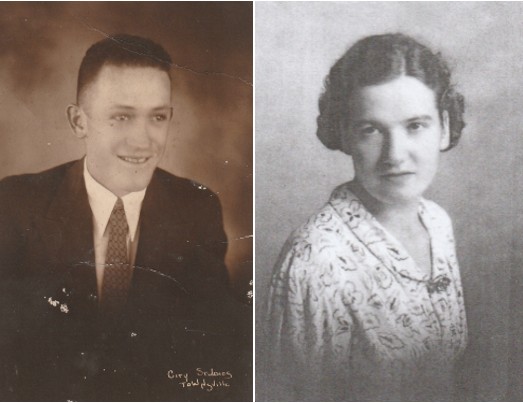 Frank and Marion Rick, 1939
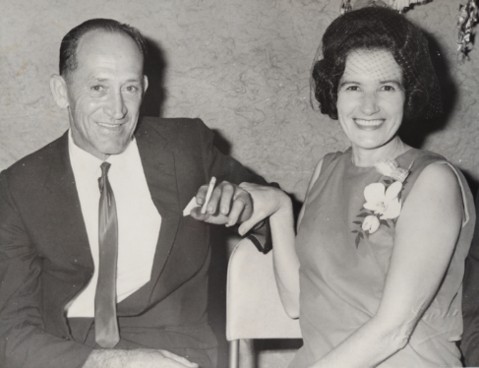
Frank and Marion Rick, 1967
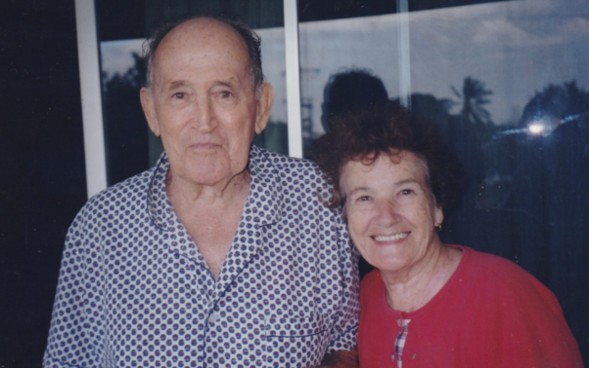 Frank and Marion Rick, 1999.
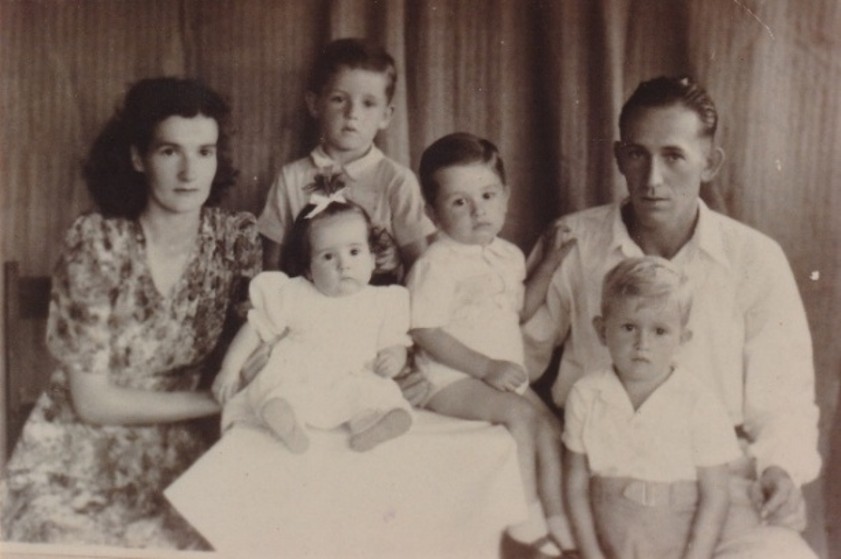 Rick Family, 1947.
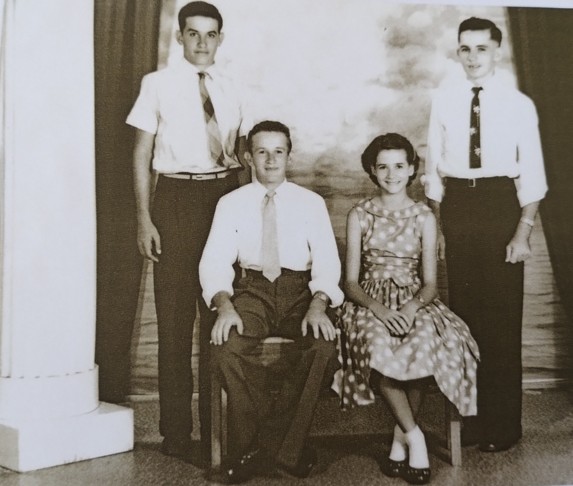
Children, 1958.
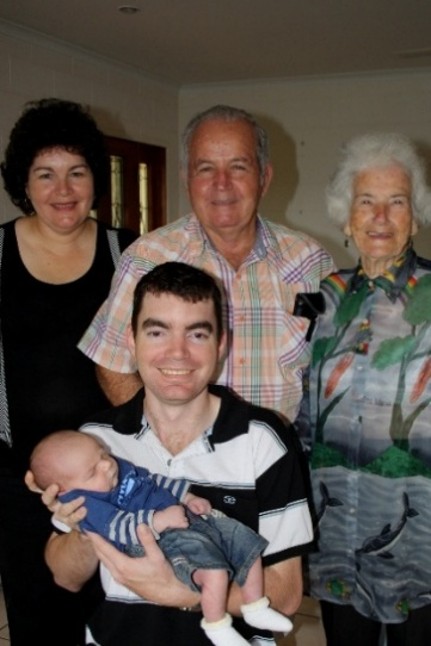 Five generations. Back: Leslee Collins, her father Lachie and grandmother Marion. Front: baby Lochlan with Leslee’s son Patrick.
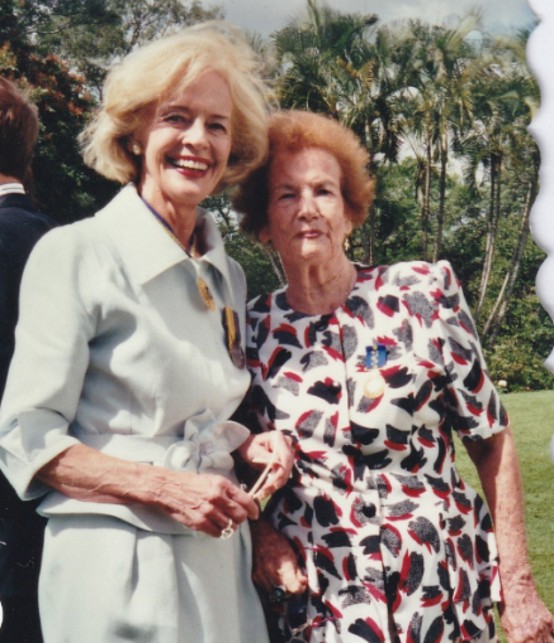 Marion with Governor General Quenton Bryce at Government House 2008
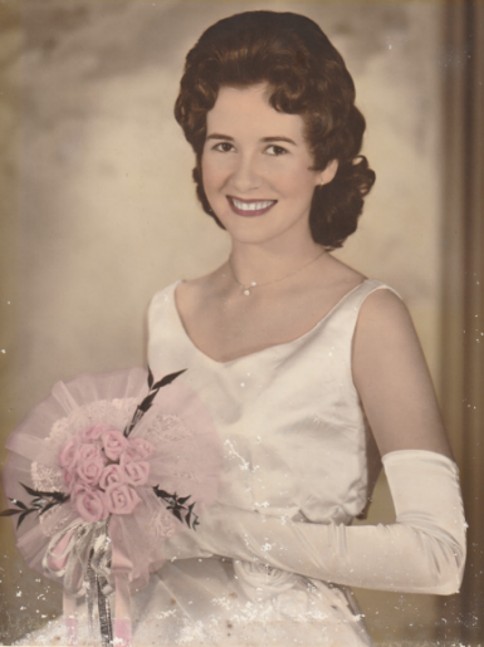 Sheena, debutante.
Acknowledgements
This brief family history would not have been possible without the generous assistance of many family members. We started collecting images and stories first from Dorothy Rick, who has fastidiously stored many documents and images relating to the lives of the Ricks and others. We then drafted a story and took that to other family members who filled in the gaps and corrected our errors.
Thanks go to Dorothy for the wealth of material and insights she provided. Also, to Lyn Rick and her son Colin and daughter Leslee Collins who shared their recollections as well.
A trip to Atherton to meet Frank and Lucille Rick was also rewarding and they certainly entertained and provided wonderful memories. Several calls and emails to Eddie McEachan in NSW gave us the stories we needed on the lives of Sheena and Eddie.
Many thanks to all these family members for making their history accessible to those seeking to learn more of Mission Beach’s rich cultural heritage.
Being the generous history-squirrel she always is, Diane Bull also chipped in with her copy of Lachie Rick’s memoir, Mission Beach as I Remember It, 2017, and that completed the picture.
|
Abridged Story | |
Full Story |